
Municipalities are enforcing the Ontario Fire Code, requiring Dry Hydrants, to be installed in areas, that do not have pressurized fire hydrants or municipal watermains. The easiest way to faze this in, is to require the installation of the system when you apply for a new building permit, in a commercial setting or residential development.
What is a Dry Hydrant?
I will start with Dry Hydrants for waterbodies. Very basically, it’s a pipe the goes below the frost line and into a water body below the thickest possible ice, so it is always available and ready to use.
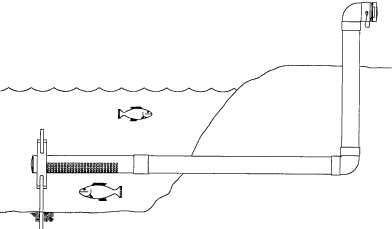
The pumper truck can connect onto the pipe and suck water out to fight fires. In a lake setting, they would have an unlimited supply of water.
Cisterns work in the same way except they have a limited water supply.
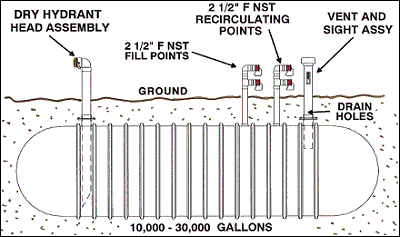
You can also use other existing water sources like rivers, creeks, ponds and wells. These sources are more rigorously tested for flow rate.
Regardless of what water source you choose or may want, for a Dry Hydrant system, it will have to meet engineering specifications and Municipality approval, and potentially a host of other government agencies like the Ministry of Environment, Ministry of Natural Resources and many more.
From what I have been reading, this can be an expensive venture. Having said that, I would suggest that before fully committing to your next project, you may want to explore your options for a Dry Hydrant.
Steven Kadar
 Recreation Business Insurance